"How much is enough?" is the most important money question most people never answer. The number is bigger than you think, because of one thing: inflation.
Step 1: what your expenses will be
At 6% inflation, prices roughly double every 12 years. So if your household spends ₹50,000 a month today, the same lifestyle will cost about ₹2.87 lakh a month in 30 years.
Step 2: how long the money must last
If you retire at 60 and plan for life up to 85, your savings must pay for 25 years of rising expenses.
Step 3: the corpus
We assume your retirement money earns 7% a year (a safe mix after retirement) while expenses keep rising at 6%.
| Your age today | Retire at | Corpus needed | Monthly SIP at 12% to get there |
|---|---|---|---|
| 30 | 60 | about ₹7.7 crore | about ₹21,900 |
| 40 | 60 | about ₹4.3 crore | about ₹43,100 |
Both assume ₹50,000 monthly expenses today and nothing saved yet. Starting at 40 needs twice the SIP for a smaller corpus, because there's less time for compounding.
Retirement & FIRE PlannerHow much you need to retire, and the SIP to get there.Open →A quick rule of thumb
Many people use "25 to 30 times your yearly expenses" as a target. On ₹6 lakh a year today that is ₹1.5–1.8 crore in today's money. The calculator turns that into future rupees for your age.
Where the money comes from
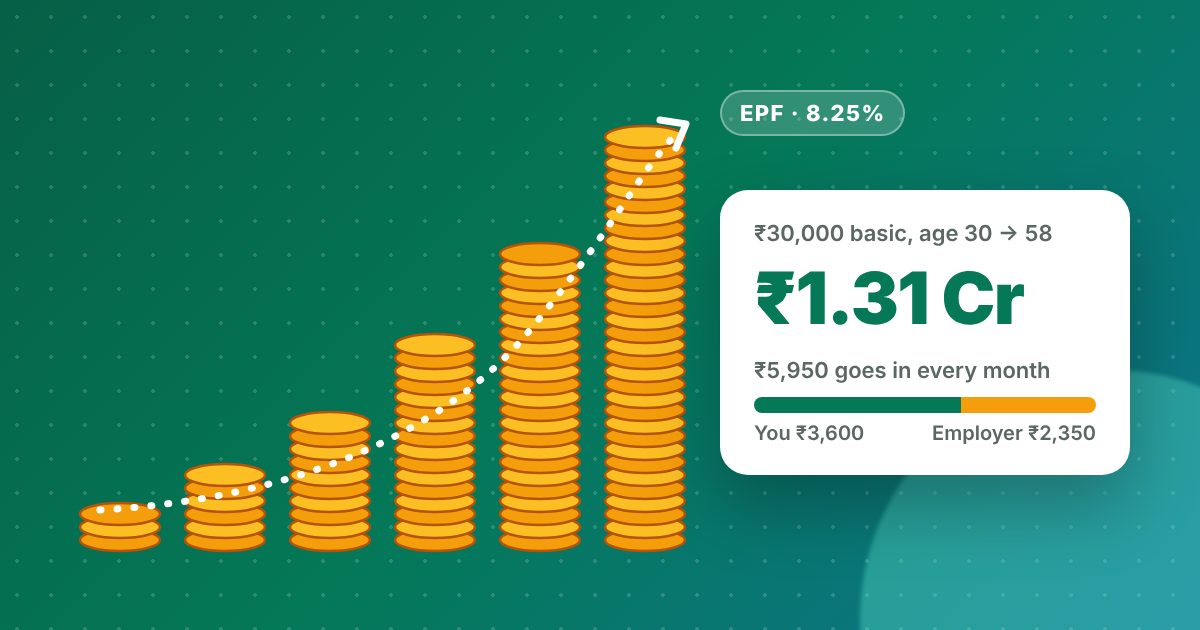
- EPF if you're salaried. It's often bigger than people expect. Check yours.
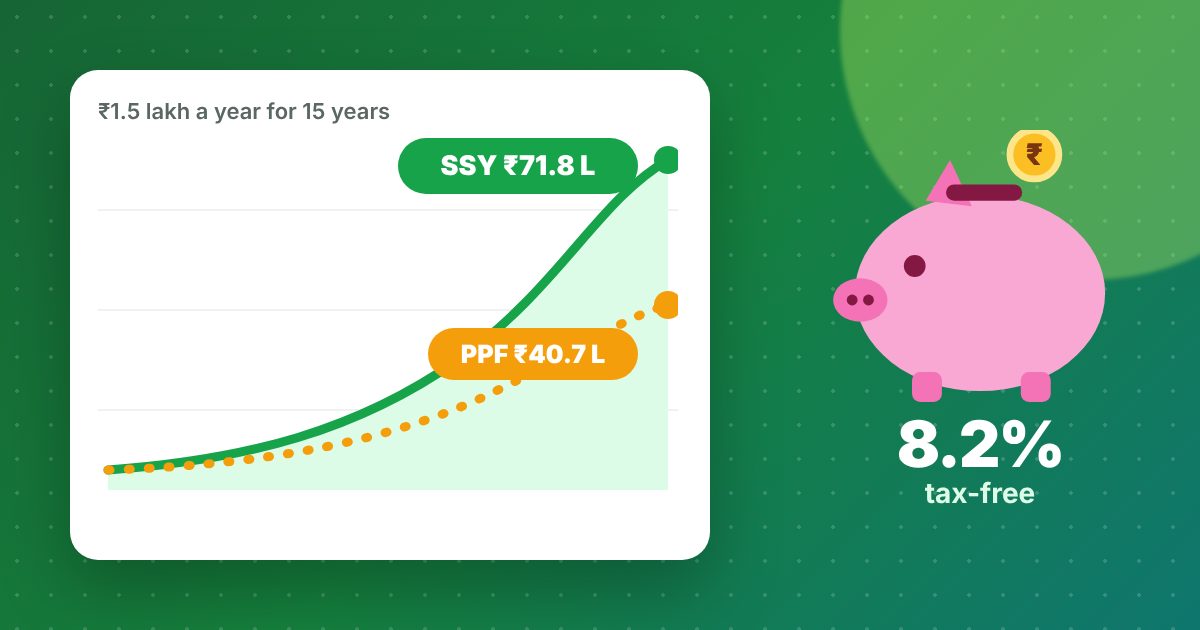
- PPF and NPS for safe, tax-efficient savings.
- Equity SIPs for growth over long periods.
- Rent or other income you'll have after retiring.
Three mistakes to avoid
- Ignoring inflation. ₹1 crore sounds like a lot, but at 6% it buys what about ₹17 lakh buys today in 30 years.
- Starting late. Every 10 years of delay roughly doubles the monthly saving needed.
- Using retirement savings for other goals. Keep a separate fund for children's education and the house.
These are estimates for planning, not investment advice. Returns are not guaranteed.